
Fog Diary
All our reading, with photographs and sources. Ideas to understand them better and make their lives a little easier.
No results match these filters.
 Halloween with dogs and cats: a safe nightPrepare a calmer Halloween for dogs and cats: shelter, visitors, treats, and decorations. A practical guide with sources and real photography.Read articleClose article

Halloween can fill the house with visitors, doorbells, and little surprises. For a dog or a cat, what we call a party can be an afternoon that is difficult to understand. Preparing for October 31st in advance allows you to organize a celebration where they also have space to rest.
Today, October 13th, we propose a simple check of your home. You don't need to turn them into the stars of a photo: you can start by asking yourself where they will be comfortable when guests arrive.
1. Prepare their corner before the party begins
Choose a quiet and familiar room, away from the entrance, with their usual resources and a known hiding spot. Introduce them to that space during normal days; improvising it when they are already scared is more difficult.
Explain to visitors that it is a place for rest: do not look for the animal or take them out to show them off. Cats Protection recommends providing a private retreat during Halloween.
2. Check the door and their identification
A door that opens many times deserves a small plan. Before answering it, check where your companion is and use a secure barrier in the hallway if you need to. Agree on who will open the door: that way everyone will know what to do when the doorbell rings.
Check that the contact information linked to their identification is up to date. The Halloween guide from the Chicago Veterinary Medical Association, with AVMA tips, reminds us of the importance of identification in the event of a possible escape. On walks, maintain a proper leash and choose a quiet route before the busiest hours.
3. Candy needs a cupboard, not a low table
Keep bags and bowls of treats out of their reach, even after the night is over. Check backpacks, pockets, and rooms where someone may have left their loot. A closed wrapper does not make the contents appropriate for a pet.
The ASPCA Animal Poison Control Center warns of the risk of sweets, especially when they contain chocolate or xylitol. If your dog or cat has eaten a sweet or you don't know what they have ingested, contact a veterinary professional as soon as possible and keep the packaging to inform them of the ingredients. Do not try home remedies or wait for signs to appear before seeking advice.
4. Decor that they can look at without reaching
Check the house from their height: remove small pieces, accessible cables, and hanging ribbons. Avoid flames near a paw or a tail and leave their usual paths clear.
The recommendations from Cats Protection highlight the risks of artificial cobwebs, cables, and candles. Simple decor can coexist better with their way of exploring.
5. Listen to how they are experiencing the night
If there is intense noise or fireworks in your area, keep doors and windows closed and prepare for rest before they start. A familiar background sound can help reduce the contrast, but it does not make the fear disappear. Do not punish them for being scared or force them to face the noise.
The RSPCA recommends planning ahead and asking for veterinary help if you are worried about their reaction. If they usually have a hard time, consult now, while there is still room to prepare an individual plan. Do not improvise medication or calming products on your own.
A pretty photo can be a photo without a costume
Cats Protection advises against dressing cats in costumes due to stress and the risk of them trying to get free. You can photograph them naturally in their corner: celebrating together also means respecting that they might prefer to sleep.
Your small checklist for October 31st
- A quiet, familiar space prepared in advance.
- Someone watching the entrance and updated identification contacts.
- Candy, cables, candles, and small pieces out of reach.
- A walk and rest routine adapted to that day's activity.
- The vet's phone number at hand and a prior plan if there is already a fear of noise.
At Niebla’s House, we believe that care is also found in these small preparations. The best night is one where you can enjoy yourself knowing that your companion has a place where they feel supported, without having to participate in everything.
General information on wellness and prevention; it does not replace a veterinary assessment. Sources consulted on October 13, 2026. Actual photograph by Andreas Ebner on Pexels, used in accordance with the Pexels license.
 A customizable frame starts with a good fitChoosing a color or finish can wait a moment: the first decision is how the saddle fits the horse and the rider.Read articleClose article

A saddle can come in the color you like, with special stitching or a finish that matches the rest of your gear. It is nice to choose those details. But when we talk about customization, the main question is whether the set fits the horse, the rider, and the intended use.
The British Horse Society explains regarding saddle fitting that a horse's shape changes with weight, physical condition, and muscle development. It also highlights the need for the equipment to be suitable for the rider and for professional checks to be carried out. A choice that worked at one time may need a later assessment.
Separate fit from appearance
Before comparing finishes, write down who the saddle will be for, what discipline or activity is practiced, and which professional will assess its fit. Then choose the aesthetic details the manufacturer allows. The word "bespoke" should be accompanied by a clear process, not limited to embroidery.
A photograph or a size chart can help start a conversation, but they do not replace an assessment of the set. Ask how the fitting is performed, what information the fitter needs, and what happens if they detect that the model is not appropriate. It is better to resolve this before confirming an irreversible customization.
Prepare a question sheet
Include materials, care instructions, replaceable parts, warranties, and available technical documentation. Add the name of the person who will carry out the assessment and how to contact them after delivery. If the product is made to order, ask for what has been agreed upon and what still depends on the fitting to be put in writing.
Also check the specific conditions applicable to personalized products. Do not assume that choosing a color means having a custom saddle made, nor that all components can be modified. A precise description prevents buying something different from what you had imagined.
Delivery does not end the process
Keep the invoice, reference number, fitting date, and instructions. Reserve a space to note revisions and relevant changes in the horse or the activity. Sharing that history with the professional helps to contextualize what you observe without relying solely on memory.
If you notice discomfort when saddling, a change in behavior, or have doubts about the saddle's support, stop using it and seek an assessment. Adding layers, tightening more, or changing parts at random can hide the problem without solving it. The BHS guide on correctly fitted tack offers more information on these checks.
Care you can maintain
Follow the manufacturer's instructions for cleaning, drying, and storing each material. Check seams, straps, and hardware, and set aside damaged equipment so that no one uses it by mistake. If several people share the stable, labeling the reference and keeping the documentation is especially useful.
In the end, good customization is recognized in well-explained decisions: what has been chosen, why, who has checked it, and how it will be cared for. The color can tell your story. The fit should allow that story to continue with the care that you both deserve.
 A horse's day also counts when no one is riding.Looking at a full day, rather than just the time spent exercising, helps identify the opportunities a horse has to live and socialize.Read articleClose article

It is easy to describe a riding session: how long it lasts, what is being worked on, and how it went. It is less common to describe the rest of the horse's day in the same detail. However, that time includes their opportunities to socialize, move, eat, rest, and choose.
The British Horse Society identifies companionship, forage, and freedom of movement as important needs, and explains enrichment as a way to add variety and choice to the environment. Their guide on enrichment offers a starting point. Adding a toy can be part of a proposal, but it is best to review the entire routine first.
Map out a real day
Write down where the horse is from morning to night, who takes care of it, and when conditions change. Include weekends and rainy days, which sometimes have different schedules. There is no need to judge the result: the first step is to have a picture that all caregivers recognize.
Mark the times when there are group changes, movements, or waiting periods. Ask the stable team what happens when you are not there. A conversation based on schedules and specific observations is easier than asking, in a general way, for the horse to spend more time entertained.
Think about companionship and space
The presence of other horses and the possibilities for interaction must be organized with safe management adapted to the individuals. Do not introduce a new companion on the fly. If living arrangements, space, or a veterinary restriction complicate the situation, ask for help to plan a suitable solution.
Note where they usually stay and if everyone has access to resources without obvious conflicts. Photographing the layout when the animals are not nearby can help in discussing gates, passageways, and feeding points. You do not need to approach a tense interaction to document it.
Feeding deserves its own plan
The BHS points out that forage should be the basis of the equine diet and that needs depend on the animal and its situation. Consult their guidelines on feeding. Quantities, access to pasture, and any restrictions require individual planning; they are not solved by copying the ration of the neighboring horse.
To review the routine with the professional in charge, bring information about schedules, types of feed, and recent changes. If several people feed, leave the guidelines in writing and indicate who carried out each feeding. This avoids duplication and makes it easier to communicate issues.
Introduce improvements you can observe
Choose a change agreed upon with the team and record what happens before and after. It could be about better organizing a shift, improving the availability of a resource, or reviewing an appropriate activity. New objects must be safe, suitable for the environment, and supervised during their introduction.
If persistent behavioral changes or signs of discomfort appear, consult your veterinarian and, where appropriate, a qualified animal behaviorist. The goal is not to keep them busy every minute. It is for their day to have the conditions and options they need, including during the hours when we are not watching.
 Dental care for dogs and cats: build a gentle routineOral health is also part of your pet's well-being. Manage their care with veterinary help and without turning every attempt into a struggle.Read articleClose article

The mouth often receives less attention than the coat or paws until something catches your eye. Incorporating its care into daily life begins with an examination and learning what we can appropriately do at home for our dog or cat.
The American Veterinary Medical Association highlights regular brushing as an important measure between professional cleanings. The AAHA dental guidelines approach care as a task that combines clinical evaluation and home attention. It is not just about choosing a product and considering oral health completely resolved.
Start with a conversation at the clinic
Ask if the mouth is in a condition to begin a routine, what equipment should be used, and how to recognize discomfort. Ask to be shown the proper technique for your animal. If pain or disease already exists, persisting with a toothbrush is no substitute for the treatment they may need.
Bring a list of what you use, including treats and products marketed as dental aids. Directions may vary depending on the animal. A recommendation for another family's dog is not, by itself, a valid guideline for your own.
Prepare the equipment before starting
Keep everything together in a clean place that is inaccessible to them. Use toothpaste and tools appropriate for their species and follow professional instructions. Cats Protection reminds us in its feline dental care guide that human toothpaste must not be used and that the introduction of brushing should be gradual.
Choose a time when you can devote your attention and stop without rushing. A routine that depends on doing everything right before leaving the house is usually difficult to maintain. Also, plan for the cleaning and drying of the equipment after each use.
Small steps, no struggling
Follow the progression you have been shown and allow for breaks. The first goal may be for them to tolerate the presence of the equipment calmly before moving on to more handling. It is not necessary to finish the entire sequence in the first session.
If they pull away, tense up, or seem bothered, stop the attempt and ask how to adapt. Avoid holding them forcefully to meet a specific time or number of passes. A short video of your setup, recorded without bothering them, can help you explain where the difficulty arises during your clinic visit.
Record what you can report clearly
Note the date, the step performed, and the observed response. "They approached the brush and then walked away" helps in revising the plan; "they don't want to cooperate" adds an interpretation that does not explain what actually happened. Share any changes in eating habits, breath, or mouth comfort with your veterinarian.
Toys and treats do not authorize postponing check-ups or scraping tartar off on your own. The goal is a sustainable routine with the level of professional help they need. Taking care of their mouth can also mean learning when to stop, ask questions, and try again with better guidance.
 Your cat's water station: comfort over complicationA well-placed water station and an easy-to-maintain routine can improve how you offer water. First, observe how your animal uses the points they already have.Read articleClose article

The water bowl usually occupies the space left free next to the food. We refill it almost without thinking and consider the job done. However, looking at where our cat drinks and what paths it takes around the house can help us better organize this little corner.
Cats Protection recommends always keeping clean, fresh water available, keeping water separate from food and the litter box, and offering multiple stations. Some cats prefer running water. The amount they drink depends, among other things, on their diet and health; a noticeable change warrants a veterinary consultation. You can find more information in their guide on cats and drinking.
Observe before changing everything
For a few days, take note of which bowl your cat uses and when. Check if it has to cross a busy area to reach it or if another animal tends to stay near the access point. It is not necessary to monitor it constantly: it is enough to incorporate this observation into the tasks you already do at home.
Draw a simple map with the water stations and the doors that remain open. If a bowl becomes isolated when you close a room, that detail deserves a solution. The best layout is the one that works during your family's actual day, not just when all the doors are open.
A container that is easy to maintain
Choose a stable model, appropriate for water and whose interior you can clean well. Check the instructions before putting it in the dishwasher or using cleaning products. After washing, rinse as appropriate and check that there are no damaged parts.
If a water fountain fits your cat's preferences, consider the maintenance as well. Before buying it, look at how it is disassembled, what parts it needs, and if you will be able to find replacements. A fountain with many accessories may be a poor choice for your routine if it turns out to be difficult to clean with the indicated frequency.
Organize shifts at home
When several people share care duties, agree on who checks each station. A "water checked" note with a date prevents everyone from assuming someone else already did it. Keep the instructions for the bowl or fountain in the same place as the rest of the animal's documentation.
During vacations, explain to the pet sitter where all the water stations are, how they are cleaned, and what the usual behavior is. It is clearer to show the locations in a group photo than to simply say that the cat has water in the kitchen.
Do not turn observation into a mandatory figure
If you are worried about how much it drinks, ask about how to record it in a useful way, especially if several animals live together. Refilling a bowl does not allow you to know exactly how much each one has drunk. Avoid making abrupt changes or removing other sources to force it to use a new container.
Today you can start with something small: clean a water bowl and check if it is in an accessible place throughout the day. Caring often consists of looking again at those tasks we do from memory and giving them a little more attention.
 Playing with your cat: short moments that deserve your full attentionYou don't always need another toy. Sometimes, changing the movement, the place, or the timing is enough to share a moment that actually interests them.Read articleClose article

You buy a toy, wave it in front of the cat, and he looks at you without getting up. The next night, he chases a shadow down the hallway. That difference might lead you to think he doesn't like to play, when perhaps what he needs is a different approach or a different time.
The Cats Protection guide on feline play recommends activities that allow for stalking, chasing, and pouncing, as well as short sessions and rotating toys. It also advises letting them catch the toy and avoiding using your hands or feet as targets. Using those foundations, you can create a routine that fits your home.
Set the stage
Choose an area without fragile objects and with enough room for you to move around. Turn off distractions that might cause you to constantly interrupt the play. If there are several animals, think about how to offer individual time without another having to compete for the same object.
Check the toy before you start: look for loose pieces, frayed strings, or damaged parts. Follow the instructions for use and supervision. Wand toys and strings should be put away when finished, in an inaccessible place. Having a box out of reach helps distinguish between toys for supervised use and those they can play with on their own.
Try just one variation
If you always make the same movement in the air, try moving the toy gently along the floor, pulling it away from the cat, and incorporating pauses. It’s not about chasing them with the object. Give them time to watch and decide if they want to approach. Observing is also part of your interaction.
Change only one thing at a time: the location, the movement, or the toy. This way, you’ll be able to recognize what sparks their interest. If you change everything at once, an entertaining session won't tell you which detail is worth repeating tomorrow.
Ending is also part of the game
You don't need to exhaust your cat or complete a set number of repetitions. If they walk away or stop participating, pack up calmly. Noting "they were interested at first and then walked away" is a more useful observation than deciding the toy was a failure. They might feel like playing differently another day.
When you wrap up the session, check that the material is still intact. Put away anything that requires supervision and clear the area. A routine that is easy to tidy up is better repeated than one that is so cumbersome it ends up being reserved only for weekends.
A small, well-known repertoire
Make a list of their three favorite activities. You can note where you use them and when they usually respond. There is no need to try something new every week: rotating a few options allows you to devote more attention to how you play and less to accumulating objects that end up unused.
If they used to play and suddenly stop, or if you notice any discomfort, consult your veterinarian. Don't try to resolve a noticeable change by insisting on more activity. For day-to-day life, start by setting aside a short time without screens, at their pace. That shared time is part of the gift.
 A cat house: heights, shelters, and meaningful pathsBefore filling a wall with platforms, observe your cat. A good space starts with their preferences and paths they can use comfortably.Read articleClose article

When we imagine a comfortable home, we usually think of the floor beneath our feet. A cat may look at the same room as a combination of heights, hiding spots, and vantage points. Preparing their space starts with recognizing which areas they use and which they avoid.
Cats Protection recommends offering indoor cats opportunities to climb, hide, scratch, and play. Their guide on the indoor cat environment helps to understand these needs. The idea is not to clutter the house with objects, but to expand the options available to your cat.
Map it out before buying modules
For a few days, note where they sleep, where they climb, and where they watch you from. Also, mark noisy spots and areas that remain closed at certain times. That map will help you avoid a common mistake: designing a beautiful route that ends at a door that is almost always closed.
Think about the way up and the way down. The distance between supports should be adjusted to their ability and may need changes over time. If they have mobility issues, seek veterinary guidance before planning jumps or heights. An accessible route is worth more than a spectacular wall they cannot take advantage of.
A refuge they can choose
Reserve an area where the cat can retreat without being taken out for interaction. It can be a shelter designed for animals or a simple and safe home solution. Observe if they prefer a wide entrance, a discreet corner, or staying close to where you are.
Talk as a family about how to respect that space. Children can be told that when the cat goes in there, they are choosing to take a break. Having that clear rule facilitates coexistence and avoids turning the refuge into another spot where they receive constant visitors.
The scratching post also has a location
Scratching is part of normal feline behavior. Cats Protection points out that the support must be stable and allow for stretching, and that some cats prefer horizontal surfaces. You will find these guidelines in their guide on scratching. See what posture they use before choosing a model just for its size or color.
Introduce changes gradually. If you put out a bed, a tower, and several modules all at once, it will be difficult to know what part they are interested in. Start with one improvement and observe. Keep the options they use while they decide what to do with the new one.
Check the assembly and real-world use
Platforms must be installed according to the instructions, with appropriate fixings for the wall and the load indicated by the manufacturer. Check the stability and condition of the support surfaces. A custom accessory still requires these checks.
After a few days, return to your map. What do they use? Can they retreat without necessarily crossing paths with another animal? Is there a piece of furniture blocking the way? Adjusting the space to those answers is a way of listening to them. Their favorite corner might be simple; the important thing is that they can make it their own.
 When your dog gets older: a more accessible homeChanging small details at home can accompany a new stage. Start by looking at how you move, where you rest, and what you need within reach.Read articleClose article

One day you notice that he waits before jumping onto the sofa, that he prefers a different bed, or that his walks have a different rhythm. Living with an aging dog invites you to pay attention to details that previously went unnoticed. The home can support this stage with simple changes designed with him in mind.
It is best to start without assuming everything is due to age. The RSPCA's guide for senior dogs warns that changes in activity, weight, or behavior may have a medical cause. It recommends veterinary check-ups and a comfortable, quiet place to rest.
Look at the morning from his height
Observe the path he takes between his bed, his water, and the exit. Is there a chair that narrows the passage? Does he have to cross a room full of people? Has the place where he used to rest become a play area? Drawing that little map helps you choose what to change first.
Removing an object in his path is usually easier than reorganizing the whole house. If you need to modify access or add a ramp, check which solution fits his mobility and how to introduce it. A support placed without stability can become a new obstacle.
Organize rest within the family
Choose an area where he can lie down without constant interruptions. Think about the cleanliness of the bed, the space to get in and out, and the ease of keeping the environment tidy. If he already has a corner he uses comfortably, use it as a starting point instead of moving him just for decorative reasons.
Talk to those who live in the house: where he is allowed to rest, how to inform guests, and who watches to see if the space is still working. A simple agreement, such as not placing bags on his bed, turns a good intention into a concrete habit that everyone can follow.
Describe what you see, without diagnosing him
A useful record can include the date, the situation, and the observed change. "He stopped in front of the step twice" informs better than "he is old." Also note if the routine or the environment was different that day. If possible to do so without bothering him, a short video of a habitual movement can help explain it during a consultation.
Avoid trying supplements, painkillers, or exercises based on informal advice. The veterinarian can assess what he needs and what changes are appropriate. The family's role is to detect what is different and share clear information, without demanding that he repeat a movement that seems to bother him.
Preserve the moments he enjoys
Adapting does not mean filling every day with novelties. You can set aside some time to be close, offer an activity that he already finds pleasant, or choose a walk that he knows. Observe how he responds and allow him to finish early. Companionship also fits into quiet moments.
To start this week, review just one route and just one resting corner. Keep your observations for his next check-up, or consult sooner if a worrying change appears. Accompanying him at this stage consists of continuing to get to know him: he has different needs, but he is still him.
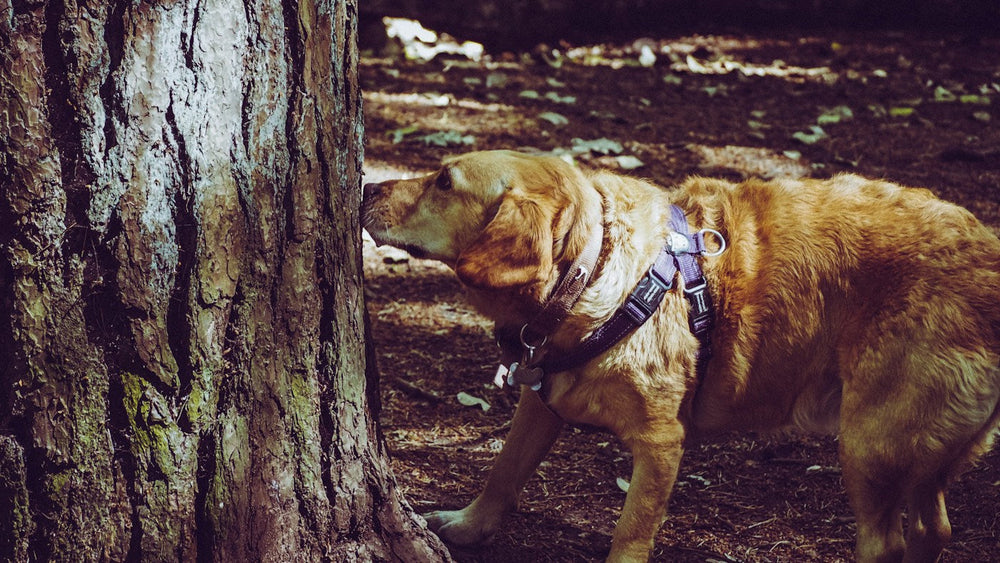 Going for a walk in lower light: prepare a comfortable routineA familiar route, checked gear, and time to head back without rushing: small habits for dawn or dusk outings.Read articleClose article
At certain times of year, we leave the house before dawn and return from work after dark. Going for a walk remains an important part of the day, but organizing it requires thinking about what we see and what others who share the street might see.
There is no single accessory that makes every route safe. The proposal is to review the location, equipment, and way you head out together. A small change, like choosing a wider sidewalk, can be more useful for your routine than adding several items without checking how they are used.
Prepare an easy-to-read route
The RSPCA recommends choosing well-lit routes for walks in low light and using reflective or light-up gear. It also reminds us of the importance of adapting care for the cold and cleaning paws after contact with substances on the ground. Its winter care guide offers more context.
Do a quick test during the day: walk the path you use at nightfall and observe intersections, steps, garage entrances, and narrow sections. Choose an alternative for spots where it is difficult to maintain distance. Knowing your way back avoids having to decide in a hurry when you encounter construction or a closed street.
Check your equipment before opening the door
Take a moment to look at the leash, the carabiner, and the fasteners. Check that they work and that there are no damaged parts. Adjust the collar or harness according to their sizing and usage guide; the fact that it fit months ago is no substitute for checking today.
If you carry a light-up item, test the battery at home. If it is reflective, remember that it needs to receive light in order to reflect it. Place it according to the instructions and without adding pieces that hinder the dog's movement. Keeping your equipment simple helps you notice sooner if something has changed.
Design an outing you can repeat
Keep the bags, equipment, and whatever you need to carry prepared, together, and out of reach of the animal. This way, you can pay attention to your dog while you head out instead of looking for an accessory with the door open. If several family members take turns, agree on where everything is stored.
Also, have a short option. There are days with heavy rain, particularly busy streets, or times when your companion needs a different pace. A flexible routine allows you to change the route without interpreting the walk as a chore that must be completed at any cost.
Upon returning, get ready for the next walk
Check if the gear needs cleaning or drying by following the manufacturer's instructions. Store damp items in a way that allows them to dry before being used again. If you notice a fastener that gets stuck or a damaged seam, set it aside from the prepared equipment so you don't grab it out of habit.
Note just one improvement for tomorrow: a different time, a less noisy street, or more time to head out. A daily walk does not need to be spectacular. What we are looking for is space to walk, explore, and return together calmly.
 How to read a pet food label without getting lost in the marketing claimsA guide to finding useful information on the packaging and preparing better questions before choosing food for your dog or cat.Read articleClose article

Choosing food for a dog or cat can feel like a vocabulary test. Packaging talks about ingredients, origins, and recipes while you try to solve a much simpler question: what is best for your companion. Starting with the basic information helps organize the comparison.
This guide serves to help read labels and organize questions. It does not allow for deciding on a therapeutic diet nor does it replace an individual assessment. If your animal has an illness, is growing, or needs to change its diet due to a health problem, take the packaging to your veterinarian before making any changes.
Locate who it is intended for
Look for the species and life stage indicated. Then, identify whether it is a complete or complementary food. According to the FEDIAF labeling guide, a complete food is formulated to meet daily needs when used as directed; a complementary food must be part of a combined diet and does not have that same function on its own.
Note those words before looking at the design of the bag. A can may look like a main meal and be complementary. Two similar-looking products may be intended for different situations. In a useful comparison, you first verify that both fulfill the function you need.
Separate data and marketing messages
WSAVA offers tools for selecting foods that direct attention toward information on the manufacturer, formulation, and quality controls. An ingredient list, in isolation, does not explain everything we need to know about a diet. Attractive words on the front of the packaging do not replace those answers either.
You can prepare a form with five fields: exact product name, species and stage, complete or complementary function, instructions for use, and manufacturer contact. If you cannot find a piece of information, write it down as a pending question. Avoid filling in the blank with what a photograph or the name of a product line seems to suggest.
Compare the cost of the routine
The price of the bag is more useful if you know how much it contains and how much would be used. For an initial comparison, divide the price by the kilograms in the packaging. If your veterinarian has already established a daily amount for that product, you can also calculate how much that regimen costs. Do not automatically copy the amount from another brand.
Include in your shopping list the treats and other extras that you use. Writing down everything that is offered during the day allows you to explain it clearly in a consultation. You don't need to create a complicated spreadsheet: a brief record with names and usual amounts is a good start.
Keep information that later disappears
Before disposing of packaging, keep a legible photo of the batch, the date, and the instructions. If you transfer the food to another container, keeping that data with it avoids confusing references. Follow the manufacturer's storage conditions, including specific ones after opening.
When comparing two options, end with three questions to be resolved, not an invented score. Is it indicated for them? Is it clear how it is used? Who can clarify what is missing? Buying with better judgment often begins by asking a specific question.
 Sniffaris: let your dog choose the way tooA stroll around the neighborhood can be a little adventure if we leave room to sniff around. We propose a simple way to get started.Read articleClose article

There are walks where we know the destination before we even close the door: going around the block, reaching the park, and returning. Our dog, on the other hand, might find the most interesting thing to be a tree that was always there. Reserving part of the outing for that curiosity changes how you share the journey.
The RSPCA explains that smells help dogs explore and gather information about their environment, and they recommend that the walk include opportunities to sniff. You can check out their activity Go on a dog sniffari. There is no need to turn every outing into a training session or equate minutes of sniffing with exercise: both activities have their place.
Start in a place you already know
To try it out, choose a familiar stretch where you can stop without blocking others. Think of an area with space, good visibility, and the ability to get home easily. The first attempt is for observation, so a complicated route only adds decisions you don't need to make yet.
Before leaving, check the fasteners, seams, and fit of the gear according to the manufacturer's instructions. Bring the usual items to clean up after them and water when the outing requires it. The goal is to enjoy an everyday walk; you don't need to buy new accessories to put this into practice.
Leave gaps in your itinerary
Choose a part of the path where you can slow your pace. When they show interest in a scent in a safe area, wait a moment and see what they do next. Maybe they will keep moving forward, take a few steps back, or find another interesting spot. Within the limits of the location, you can accompany those small decisions.
Allowing them to choose does not mean letting them approach trash, unknown substances, animals that need space, or traffic areas. If a spot isn't safe, move away calmly and offer another direction. You also don't need to greet every dog you come across: a pleasant walk allows for both encounters and space.
A three-question journal
When you return, write down three things: where they stopped, where they walked comfortably, and what situation was difficult for you. These are observations, not an assessment of whether they behaved well. You can write "they stopped at the bushes" or "the narrow sidewalk was uncomfortable" without attributing emotions you cannot interpret.
Repeat the suggestion another day and compare. If the park was too crowded, try a quieter time slot. If the walk there went better than the walk back, think about whether the noise, the space, or your hurry changed. A brief note is more useful than trying to remember all the details a week later.
Returning early is also fine
Adapt the route, effort, and duration to your dog's needs and any veterinary recommendations they may have. The goal is not to complete a route at all costs. If something makes you uncomfortable, returning or choosing a different street is a perfectly valid decision.
For your next outing, propose one single change: put your phone away for a stretch and pay attention to their pauses. Sometimes, getting to know the one walking by our side starts by looking at the same path at a different speed.
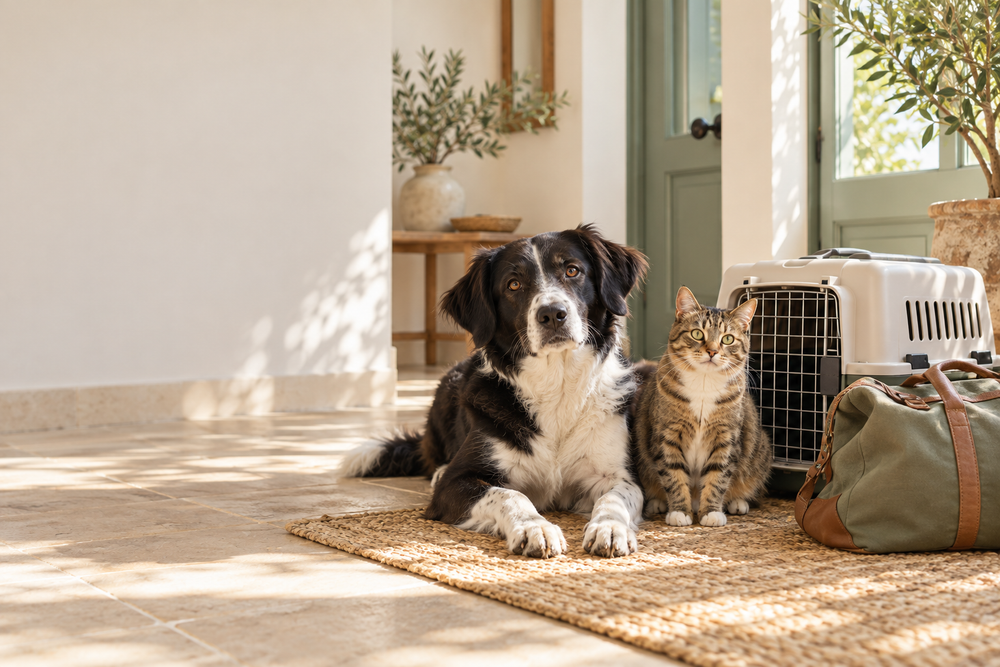 Traveling by car with your dog or cat: preparing for the tripA calmer journey begins before you even start: proper restraint, breaks, temperature, and getting out of the car without any sudden movements.Read articleClose article
A short trip to the vet or a weekend getaway starts long before you turn on the car. Preparing the space where your dog or cat will travel, the pace of stops, and the moment you open the door can make the journey easier for everyone.
Before leaving: a safe spot for everyone
The Directorate-General for Traffic (DGT) reminds us that an animal must not travel loose or interfere with the driver. It is also not advisable to hold them in your arms, tie them with a walking leash, or secure them by their collar. Choose a restraint system appropriate for their size, the vehicle, and the manufacturer's instructions; check the anchors before each trip.
For a cat, a carrier prevents them from getting under the pedals or escaping when a door is opened. If you are traveling with a dog, do not assume that a walking harness serves as a road safety system. In a 2025 report, the DGT warns that there is still no general certification guaranteeing the effectiveness of all devices sold for pets. Look for information on crash tests for the specific model and use it exactly as the manufacturer indicates; a catchy label is not a substitute for that data.
Get them familiar with the carrier or restraint
If the animal only sees the carrier when it's time for a difficult visit, start introducing it at home well in advance. Leave it open in a quiet place so they can explore it, place a familiar blanket inside, and allow them to enter voluntarily. Afterward, practice short trips when possible. The DGT recommends getting the animal used to the restraint system before a long trip. You don't need to force a session if they show clear signs of discomfort: you can move more slowly and ask for professional guidance.
During the journey: air, breaks, and calm
Prepare water, basic cleaning supplies, and the documentation relevant to your route. Check that ventilation reaches the animal's space and that there is no loose luggage next to them. The DGT advises planning stops approximately every two hours to attend to their needs and offer hydration. The actual frequency will depend on the animal and the trip.
Before opening a door or the trunk, ensure the animal is secured. An unfamiliar environment and the noise of a stop can cause a sudden escape. With a cat, keep the carrier closed while the car doors are open. With a dog, prepare the control before releasing the vehicle restraint.
Never leave your pet alone inside a parked car. The American Veterinary Medical Association warns that the cabin can heat up quickly even in the shade and with the windows cracked. This precaution is also important when the day does not seem particularly hot.
If the trip makes them sick, consult before trying again
Some animals get motion sickness or experience the car with a lot of stress. If you observe vomiting, intense restlessness, or other changes during the trip, talk to your veterinarian before planning another one; they can assess the case and advise you without resorting to improvised remedies. Do not administer medication on your own.
The best travel checklist is simple: a safe place, an animal accustomed to it gradually, time to stop, and attention to how they are feeling. Arriving matters, but how you made the journey together matters too.
Sources consulted
- DGT, "With your pet", updated September 22, 2025.
- DGT, "Four-legged passengers: Do we know how to protect our pets?", updated June 6, 2025.
- American Veterinary Medical Association, "Warm weather pet safety", consulted October 12, 2026.