
Playing with your cat: short moments that deserve your full attention
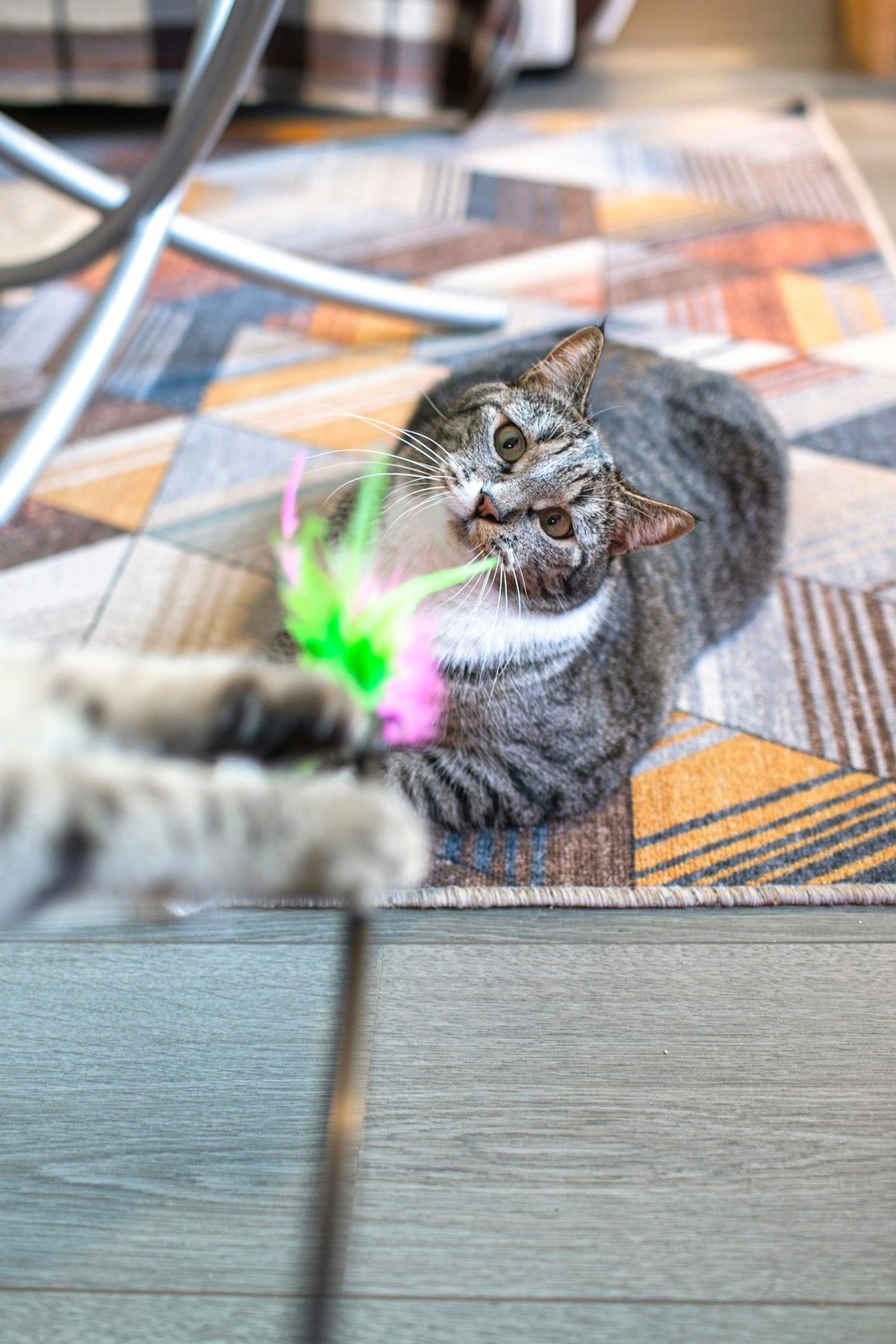
You buy a toy, wave it in front of the cat, and he looks at you without getting up. The next night, he chases a shadow down the hallway. That difference might lead you to think he doesn't like to play, when perhaps what he needs is a different approach or a different time.
The Cats Protection guide on feline play recommends activities that allow for stalking, chasing, and pouncing, as well as short sessions and rotating toys. It also advises letting them catch the toy and avoiding using your hands or feet as targets. Using those foundations, you can create a routine that fits your home.
Set the stage
Choose an area without fragile objects and with enough room for you to move around. Turn off distractions that might cause you to constantly interrupt the play. If there are several animals, think about how to offer individual time without another having to compete for the same object.
Check the toy before you start: look for loose pieces, frayed strings, or damaged parts. Follow the instructions for use and supervision. Wand toys and strings should be put away when finished, in an inaccessible place. Having a box out of reach helps distinguish between toys for supervised use and those they can play with on their own.
Try just one variation
If you always make the same movement in the air, try moving the toy gently along the floor, pulling it away from the cat, and incorporating pauses. It’s not about chasing them with the object. Give them time to watch and decide if they want to approach. Observing is also part of your interaction.
Change only one thing at a time: the location, the movement, or the toy. This way, you’ll be able to recognize what sparks their interest. If you change everything at once, an entertaining session won't tell you which detail is worth repeating tomorrow.
Ending is also part of the game
You don't need to exhaust your cat or complete a set number of repetitions. If they walk away or stop participating, pack up calmly. Noting "they were interested at first and then walked away" is a more useful observation than deciding the toy was a failure. They might feel like playing differently another day.
When you wrap up the session, check that the material is still intact. Put away anything that requires supervision and clear the area. A routine that is easy to tidy up is better repeated than one that is so cumbersome it ends up being reserved only for weekends.
A small, well-known repertoire
Make a list of their three favorite activities. You can note where you use them and when they usually respond. There is no need to try something new every week: rotating a few options allows you to devote more attention to how you play and less to accumulating objects that end up unused.
If they used to play and suddenly stop, or if you notice any discomfort, consult your veterinarian. Don't try to resolve a noticeable change by insisting on more activity. For day-to-day life, start by setting aside a short time without screens, at their pace. That shared time is part of the gift.