
Traveling by car with your dog or cat: preparing for the trip
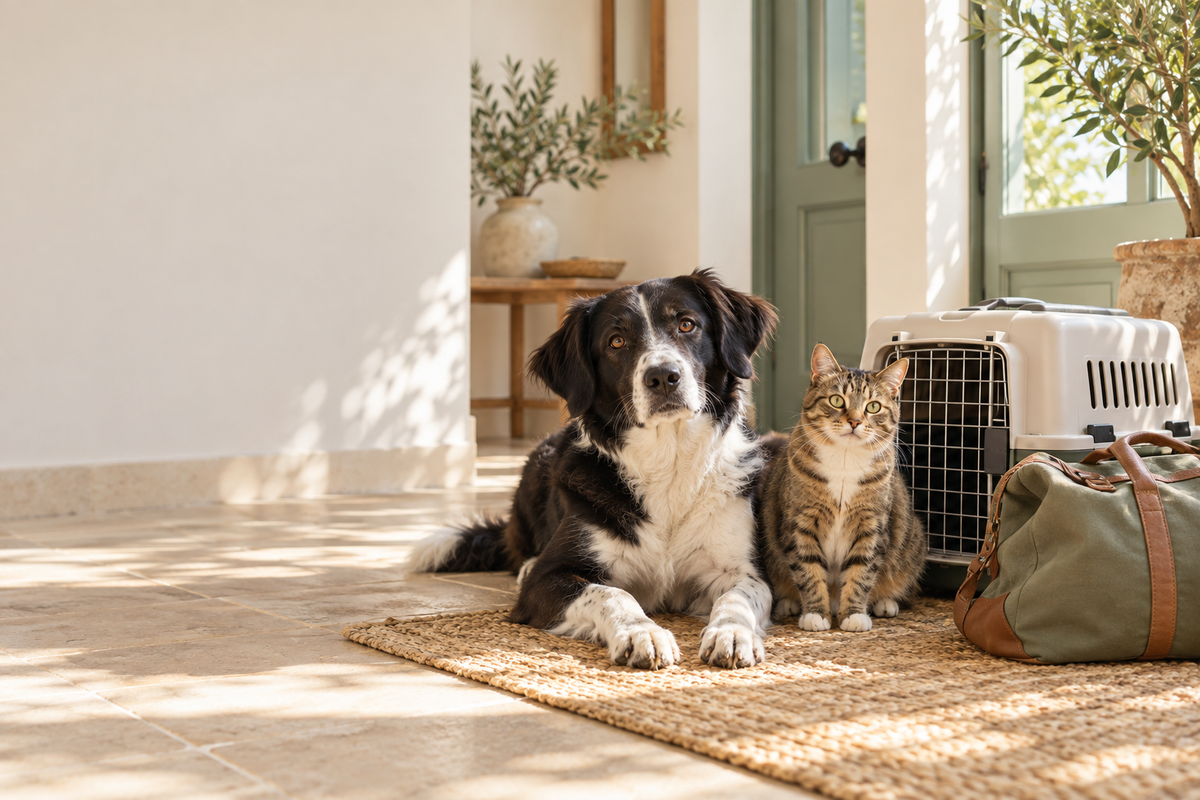
A short trip to the vet or a weekend getaway starts long before you turn on the car. Preparing the space where your dog or cat will travel, the pace of stops, and the moment you open the door can make the journey easier for everyone.
Before leaving: a safe spot for everyone
The Directorate-General for Traffic (DGT) reminds us that an animal must not travel loose or interfere with the driver. It is also not advisable to hold them in your arms, tie them with a walking leash, or secure them by their collar. Choose a restraint system appropriate for their size, the vehicle, and the manufacturer's instructions; check the anchors before each trip.
For a cat, a carrier prevents them from getting under the pedals or escaping when a door is opened. If you are traveling with a dog, do not assume that a walking harness serves as a road safety system. In a 2025 report, the DGT warns that there is still no general certification guaranteeing the effectiveness of all devices sold for pets. Look for information on crash tests for the specific model and use it exactly as the manufacturer indicates; a catchy label is not a substitute for that data.
Get them familiar with the carrier or restraint
If the animal only sees the carrier when it's time for a difficult visit, start introducing it at home well in advance. Leave it open in a quiet place so they can explore it, place a familiar blanket inside, and allow them to enter voluntarily. Afterward, practice short trips when possible. The DGT recommends getting the animal used to the restraint system before a long trip. You don't need to force a session if they show clear signs of discomfort: you can move more slowly and ask for professional guidance.
During the journey: air, breaks, and calm
Prepare water, basic cleaning supplies, and the documentation relevant to your route. Check that ventilation reaches the animal's space and that there is no loose luggage next to them. The DGT advises planning stops approximately every two hours to attend to their needs and offer hydration. The actual frequency will depend on the animal and the trip.
Before opening a door or the trunk, ensure the animal is secured. An unfamiliar environment and the noise of a stop can cause a sudden escape. With a cat, keep the carrier closed while the car doors are open. With a dog, prepare the control before releasing the vehicle restraint.
Never leave your pet alone inside a parked car. The American Veterinary Medical Association warns that the cabin can heat up quickly even in the shade and with the windows cracked. This precaution is also important when the day does not seem particularly hot.
If the trip makes them sick, consult before trying again
Some animals get motion sickness or experience the car with a lot of stress. If you observe vomiting, intense restlessness, or other changes during the trip, talk to your veterinarian before planning another one; they can assess the case and advise you without resorting to improvised remedies. Do not administer medication on your own.
The best travel checklist is simple: a safe place, an animal accustomed to it gradually, time to stop, and attention to how they are feeling. Arriving matters, but how you made the journey together matters too.
Sources consulted
- DGT, "With your pet", updated September 22, 2025.
- DGT, "Four-legged passengers: Do we know how to protect our pets?", updated June 6, 2025.
- American Veterinary Medical Association, "Warm weather pet safety", consulted October 12, 2026.